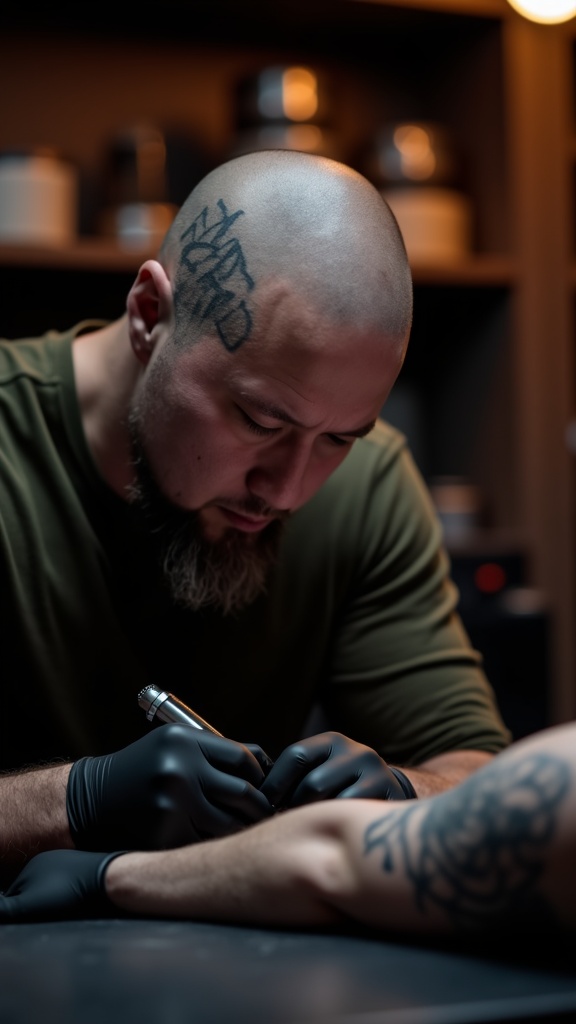
Color Tattoos on Darker Skin: Art and Science
Tattooing Color on Darker Skin: A Comprehensive Analysis of Science, Art, and Representation
For decades, a persistent, quiet myth echoed through tattoo shops: color simply didn't work on darker skin. It was presented as a biological fact, an unchangeable rule of the craft. Clients with melanin-rich skin were often steered toward black and gray palettes, their desires for vibrant color met with a resigned shake of the head. As a tattoo artist who has dedicated my career to understanding the canvas as deeply as the ink, I'm here to tell you that this wasn't just a myth, it was a profound misunderstanding. The truth is far more beautiful and empowering. Tattooing vibrant, saturated color on darker skin is not only possible, it can yield some of the most stunning, powerful artwork imaginable. It requires a specific understanding, a blend of science and artistry, but it is absolutely within reach. This isn't about pushing boundaries for the sake of it, it's about correcting a historical oversight and embracing the full, glorious spectrum of human skin as a canvas for fine art.
The Biological Foundation: Understanding Melanin and Tattoo Ink Interaction
To master color on darker skin, we must first become students of skin itself. The key lies not in the skin's inability to hold pigment, but in how we perceive it. Think of it as a brilliant optical phenomenon, not a limitation.
Tattoo ink is deposited into the dermis, the stable, second layer of skin. Sitting above this is the epidermis, which contains melanocytes, the cells that produce melanin. This melanin gives skin its beautiful tone and acts as a natural sunscreen. Critically, the melanin and the tattoo ink never physically mix, they exist in separate layers. The melanin-rich epidermis acts like a tinted filter, or a pane of stained glass, placed over the artwork in the dermis. This filter changes how we see the colors beneath it.
This filter works through light absorption. Melanin absorbs and scatters light, particularly in the blue and violet spectrum. This means lighter, delicate hues like pale yellows or soft pastels, which rely on reflecting a lot of light, can become muted or nearly invisible when viewed through this filter. Conversely, darker, more saturated pigments, think deep emerald greens, rich crimsons, or royal blues, have the pigment density to punch through that filter. They reflect wavelengths that melanin doesn't absorb as readily, creating strong visual contrast and visibility. It's a lesson in physics and color theory, not biology saying "no."
This leads us to a fundamental principle: saturation is king. On darker skin, the purity and intensity of a color matter more than the hue itself. A highly saturated amethyst will sing where a diluted lilac will whisper. A cobalt blue will hold its ground where a sky blue may fade into the background. We are designing for the healed, settled tattoo viewed through that beautiful, permanent filter, not for the temporarily vivid appearance of freshly inked skin.
Historical Context: From Outdated Rules to Evidence-Based Practice
So where did the myth come from? It didn't spring from malice, but from a confluence of industry bias and limited education. For generations, tattooing centered light skin as the default canvas. Flash sheets were drawn for it, portfolios were photographed on it, and apprentices were trained primarily on it. When an artist's entire visual reference library is built around one skin tone, anything else becomes an unknown, a "risk." The well-intentioned advice to "stick with bold black and gray for better contrast" on darker skin slowly hardened into an absolute rule: "color doesn't work."
This created a self-perpetuating cycle. A lack of visible examples led to fewer attempts, which reinforced the belief. Furthermore, photography often failed darker skin. Harsh studio lighting and editing techniques meant to reduce redness would inadvertently lighten skin tones in portfolio photos, effectively erasing the true canvas from the record. The industry's historical lack of diversity meant that many Black and Brown clients encountered artists who, through no fault of their own sometimes, simply lacked the specific training and reference points to confidently execute their color visions. This wasn't a client limitation, it was an industry knowledge gap.
The shift we're witnessing now is revolutionary. Pioneer artists, many of them Black and Brown themselves, began to treat darker skin not as a problem to work around, but as a unique and powerful canvas to master. They studied the science, documented their healed work with proper photography, and shared their knowledge. They proved, through breathtaking artwork, what was always technically possible. This movement is about more than technique, it's about representation, respect, and expanding the very definition of what a tattoo canvas can be.
Color Theory Applied: Which Colors Work Best and Why
Armed with an understanding of the "filter," we can apply color theory with purpose. It becomes a strategic game of contrast and harmony. Think of brown skin tones as residing in the yellow-orange segment of the color wheel. From there, we can choose colors that create beautiful visual relationships.
- Black: Always the champion of contrast on any skin tone. It provides essential structure and definition, making it perfect for bold outlines that will keep color fields distinct and legible for decades.
- Red: A superstar. Sitting opposite yellow-orange on the color wheel, red creates natural, complementary contrast. It holds incredible warmth and vibrancy on darker skin, making it ideal for classic motifs like roses or geometric elements.
- Green: Another excellent performer, particularly deeper forest or emerald greens. It sits several steps away from yellow-orange, creating strong separation. The classic combination of red and green on darker skin is not just festive, it's optically powerful and stunning.
- Blue: Here we need nuance. Cool, light blues can struggle, but saturated, warmer blues like royal or cobalt are fantastic. The depth of pigment overcomes the filter. Think navy, not baby blue.
- Purple: The most challenging family, but not impossible. Avoid cool, lavender tones. Instead, lean into warmer, red-based purples: magentas, plums, and wines. These carry enough warmth and saturation to shine.
- Yellow & Orange: These are the most difficult, as they live in the same neighborhood as the skin's undertone. They often lack contrast and can heal very muted. They are best used sparingly, for specific effects, or with the understanding they will act more as subtle tones than bold statements.
- White: Crucial to understand: white ink on darker skin does not heal bright white. It heals as a lightened tone of the skin itself. It's a fantastic tool for subtle highlights and softening edges, but a poor choice for creating primary white elements in a design.
Beyond hue, we must consider the individual's unique undertone. Is their skin warmth more golden, more red, or more neutral? A consultation with a knowledgeable artist will involve assessing this, as it fine-tunes color choices. A golden undertone might make a rich blue pop even more, while a red undertone could make that same blue appear slightly different. This personalized approach is the mark of a true craftsman.
Technical Execution: How Skilled Artists Adapt Their Approach
Knowing what colors to use is half the battle, knowing how to apply them is the other. The technique must be as considered as the palette.
Linework and Structure
Fine, whisper-thin lines may not age with the same clarity on darker skin as they would on a lighter canvas. This isn't a flaw, it's a characteristic. Experienced artists often employ slightly bolder, more confident line weights to ensure the tattoo's architecture remains strong and readable for a lifetime. It's about building a resilient foundation.
Saturation and Trauma
Achieving full, rich saturation is non-negotiable. This is done with high-quality, pigment-dense inks and efficient technique. A common and damaging misconception is that darker skin needs to be "worked harder" or deeper to take color. This is false and dangerous. Overworking the skin leads to unnecessary trauma, increasing risks of scarring, keloids, and poor healing. The goal is precise, efficient deposition into the correct layer of the dermis, not brute force.
Designing for the Healed State
Every tattoo transforms as it heals. On darker skin, this transformation is more pronounced due to the melanin filter. A skilled artist designs with the final, healed image in mind, not the temporarily vivid "fresh" tattoo. This means building in stronger value contrasts and understanding how colors will settle. Strategic use of negative space (untattooed skin) within the design can also make adjacent colors appear more vibrant by providing visual relief.
The Devil in the Details
Even the stencil matters. Traditional purple stencil ink can dry with a faint metallic sheen on darker skin, making it hard to see. Many artists who specialize in this work use red stencil paper, which remains crisp and visible on all skin tones. Furthermore, for ambitious color projects, a "color test" is a sign of a true professional. Tattooing small, hidden dots of your chosen palette and letting them heal fully shows exactly how those specific inks will behave on your unique skin, removing all guesswork.
The Healing Process and Potential Considerations
Healing follows the same stages on all skin tones: initial inflammation, peeling, settling, and final clarity around the 6-8 week mark. However, there are specifics to watch for with melanin-rich skin.
The fresh tattoo will look darker and more vivid than the final result. As it heals and the surface ink sheds, it may go through a cloudy phase before revealing its true, settled appearance. This is normal. Temporary hyperpigmentation (darkening) around the tattooed area is also more common as part of the skin's healing response; this usually fades with time and proper care.
The most discussed concern is keloiding, an overgrowth of scar tissue. While individuals with darker skin have a higher genetic predisposition to keloids, the trigger is trauma. An experienced artist using proper, gentle technique minimizes trauma, thereby minimizing this risk. Keloids are far more often the result of poor technique than an inevitable outcome of tattooing darker skin.
Aftercare is paramount: keep it clean, moisturized, and fiercely protected from the sun. UV rays fade all tattoos, and while the contrast may be less visually obvious on darker skin, the damage is being done. SPF 50+ is your tattoo's best friend for life.
Representation, Artist Selection, and the Path Forward
This journey is as much about culture as it is about chemistry. Representation fuels change. When clients see stunning color work on skin that looks like theirs, it shatters the old myth and empowers them to seek that quality for themselves. It's why I am so meticulous about photographing my work accurately, using lighting that honors the true skin tone, not washes it out.
Finding the right artist is your most important step. Look beyond the flashy fresh photos. Seek out portfolios that show healed work on a diverse range of skin tones. In your consultation, listen carefully. An expert will speak confidently about undertones, saturation, and healing expectations. They will welcome your questions about their experience. Be wary of any artist who seems hesitant, dismissive, or immediately tries to steer you away from color without a detailed, technical explanation.
The industry is evolving, thanks to educators, advocates, and collectives pushing for inclusivity. More artists are seeking specific training on diverse skin tones. Ink brands are developing richer, more saturated pigments. The conversation has expanded from "can it be done?" to "how can we do it exceptionally well for everyone?"
Conclusion: A New Standard of Artistry
Tattooing vibrant color on darker skin is a testament to the fusion of science and art. It dismantles outdated myths and replaces them with evidence-based, beautiful practice. The canvas of melanin-rich skin is not a limitation, it is a unique and powerful medium that, when understood and respected, can hold some of the most profound and vibrant artwork imaginable.
This is the future of tattooing: inclusive, educated, and relentlessly creative. It acknowledges that mastery means understanding every canvas that walks through the door. If you have darker skin and have dreamed of color, know that your dream is valid and achievable. Your skin is a beautiful foundation for art. The key is finding an artist who sees that not as a challenge, but as an inspiration. Together, we are not just placing ink, we are rewriting history, one beautiful, colorful tattoo at a time.
