Crafting Your Tattoo Narrative: A Collector's Guide
Mastering the Art of the Tattoo Narrative: A Comprehensive Guide for Collectors
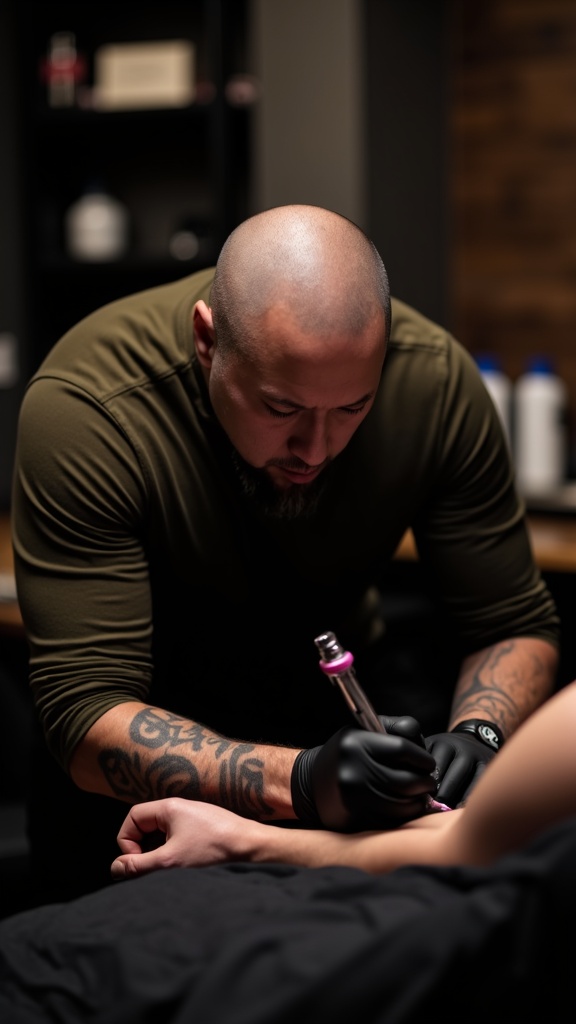
In a world saturated with fleeting images and temporary trends, the decision to get tattooed stands as a profound act of personal legacy. It’s more than adornment, it’s storytelling in its most permanent and intimate form. Whether you’re contemplating your first piece, adding to a curated collection, or dreaming of a full-scale project, the process of bringing a meaningful tattoo to life shares a deep kinship with crafting a compelling article. It requires structure, research, a clear voice, and meticulous revision. As a tattoo artist, I don't just apply ink, I help author chapters of a personal history. This guide synthesizes the principles of great writing into a framework for creating exceptional tattoo art that informs, engages, and resonates for a lifetime.
Understanding the Structure: The Foundation of a Cohesive Collection
The most powerful tattoo collections, like the most successful articles, follow an intentional structural framework. There’s a narrative flow, a visual logic. We might think of it not as an inverted pyramid, but as a curated gallery. What is the central theme, the “lead paragraph” of your body’s story? Is it a large, central piece on the back or chest that establishes the core theme (the who, what, and why)? From there, supporting elements, like sleeve work or complementary pieces on limbs, add detail, context, and emotional depth.
Structure operates on both a macro and micro level. The macro structure is the overall placement and flow across your body’s landscape, how a piece on your shoulder relates to one on your forearm. The micro structure is found in the tattoo itself: the composition, the line weight variation, the interplay of positive and negative space that guides the viewer’s eye. Just as varying sentence structure creates energy in writing, varying visual elements, the friction between bold traditional lines and delicate single-needle shading, creates engagement and maintains interest. Repetition without thought leads to a cluttered, confusing canvas, variety with intention builds a masterpiece.
Research and Preparation: Building Your Visual Knowledge Base
Thorough research is the backbone of any quality tattoo, the unsung hero beneath the surface of the art. This isn’t just scrolling Pinterest (though that can be a start). It’s about using reliable primary sources. For a historical motif, that might mean studying period-accurate art and artifacts. For a portrait, it means gathering high-quality, meaningful reference photos. For a naturalistic piece, it means understanding the real anatomy of a flower or the true posture of an animal. Your credibility as a collector, and mine as your artist, depends on this foundational accuracy.
Our consultation is your interview, and you should come prepared with questions. More importantly, come with an open dialogue. Before a single line is drawn, we develop a preliminary outline together. We reflect on your gathered ideas, your personal symbolism, and the body’s architecture. We ask: Does this concept follow a logical emotional sequence? Would a chronological arrangement of elements tell your story best? Are there symbols that lose their power or coherence when placed out of context? A well-structured plan, a collaborative outline, transforms overwhelming inspiration into a manageable, exciting journey, segment by segment.
Crafting the Compelling Narrative: From Concept to Final Line
The Headline and Lead: The Central Image
Your central tattoo concept is your headline, it’s the first impression of your personal story. It should communicate your subject matter with immediate, arresting clarity while standing out as uniquely yours. Is it a majestic animal guardian across the shoulders? A delicate, symbolic bouquet over the heart? This “lead” image must deliver the essential emotional facts concisely. For larger, multi-session projects, the introduction is the master plan, the thesis statement that hooks with its potential and clearly presents the vision for the whole.
The Body: Building Your Visual Argument
The body of your work, the additional pieces that fill a sleeve or connect across the torso, expands on your introduction with layers of facts (specific dates, names in script), quotes (meaningful poetry integrated into the design), and context (background patterns that root the subject in a specific place or time). We follow core principles for maximum impact:
Use a visual hierarchy: Present the most important focal points with the most visual weight.
Incorporate credible style references: Add perspective and authority by respecting the traditions of a chosen style, whether it’s Japanese Irezumi, American Traditional, or fine-line blackwork.
Employ clear transitions: Use flowing elements, like wind bars, water, vines, or strategic negative space to guide the eye smoothly between ideas and images.
Group related information: Keep symbolic elements that belong together in cohesive clusters within the composition.
Maintain focal points: Each section of a larger piece should have its own point of interest, contributing to the whole.
Avoid trying to cover too much territory in one sitting, or one design. As in writing, if you try to encapsulate your entire life philosophy in one crowded, chaotic tattoo, the message gets lost. Look for an individual thread of your story, a single, powerful chapter, and pull. A manageable scope ensures depth, quality, and a result that breathes.
Techniques That Elevate the Craft: The Artist's Hand
Style and Execution
Professional tattoos, across all styles, share common technical elements that enhance readability, longevity, and impact:
Use intentional, confident lines: Wobbly, uncertain linework obscures meaning and beauty. Clean, purposeful lines are the foundation.
Prefer dynamic composition: A static, centered image can fall flat. Designs should work with the body’s musculature and movement, creating a living canvas.
Eliminate unnecessary elements: Be concise and precise. Every dot, every shade of gray should serve the overall design. Less is often more.
Vary texture and technique: Create rhythm and maintain interest through the interplay of solid black, smooth gradients, stippling, and fine details.
Maintain a consistent style language: Match your technical execution to the chosen aesthetic. A neo-traditional piece and a photorealistic portrait demand different stylistic vocabularies.
Pay meticulous attention to the fundamentals. Nothing damages the integrity of a tattoo faster than a poorly rendered hand, confusing perspective, or misspelled script. As a professional, such errors are unthinkable, they represent a broken contract of trust between artist and client.
Discoverability and Legacy Considerations
Creating a tattoo requires thinking beyond the immediate session. Consider how this art will live and be discovered, both by others and by your future self:
Include strategic symbolism: These are the personal keywords, the hidden meanings that index your story within the art.
Optimize for your body’s canvas: A design is memorable when it fits its placement perfectly, as if it always belonged there.
Craft an effective “abstract”: Can the core meaning of the piece be understood at a glance, while deeper layers reveal themselves upon closer inspection?
Think about aging and longevity: How will bold holds, fine details, and color saturation discover themselves over the decades? Good technique is sustainable technique.
The Revision Process: Where Good Ideas Become Great Tattoos
Exceptional tattoos are rarely created in a single, hasty drawing. The collaborative process between artist and client is one of respectful revision. We embrace these principles:
Schedule with intention: Multi-session projects benefit from a thoughtful timeline, creating productive focus for both of us.
Build section by section: We start with the core, the element we know is solid, and expand from that foundation.
Eliminate extraneous elements: We must be ruthless in cutting visual clutter that doesn’t serve the story or the composition.
Proofread the stencil meticulously: Checking placement, size, orientation, and flow on the actual body is the final, crucial edit before commitment.
Seek fresh perspectives: Trusting your artist’s expertise is key. We are your editors, bringing a trained eye for what will work best on skin.
Remember that the design process is one of discovery. You often don’t know exactly how an idea will translate until we begin sketching and discussing. Allow for that exploration. The perfect, rigid idea in your head may be less powerful than the beautiful, fluid adaptation that emerges through dialogue and artistic interpretation.
Finding Your Best Ideas: Look to the Gaps
Some of the most compelling tattoo concepts emerge not from what you know you want, but from what you haven’t yet articulated. Don’t just consider the symbols you’re already attached to, consider the feelings, the memories, the turning points in your life that lack a visual language. It’s in the gaps of your self-knowledge that the most authentic and powerful ideas are often found. This approach creates a more relatable, human connection to the art. It brings the process off the pedestal of mere decoration and onto the terra firma of genuine personal expression. My role is to help you translate those intangible feelings into a tangible, beautiful mark.
Conclusion: The Path to a Meaningful Collection
Mastering the art of your tattoo narrative requires understanding visual structure, conducting thoughtful personal research, crafting a compelling concept, trusting in expert technique, and embracing a collaborative, revision-minded process. By following these principles, you’ll create body art that doesn’t just occupy skin, but informs your sense of self, engages those who see it with its depth, and resonates as a true legacy in today’s often temporary world.
The most fulfilled collectors treat tattooing as both a personal art and a disciplined collaboration. They understand that while initial inspiration matters, the consistent application of trust, communication, and patience matters more. Start implementing this framework for your next piece. Let’s transform your story from a fleeting thought into an exceptional, enduring work of art, one deliberate, beautiful line at a time.
