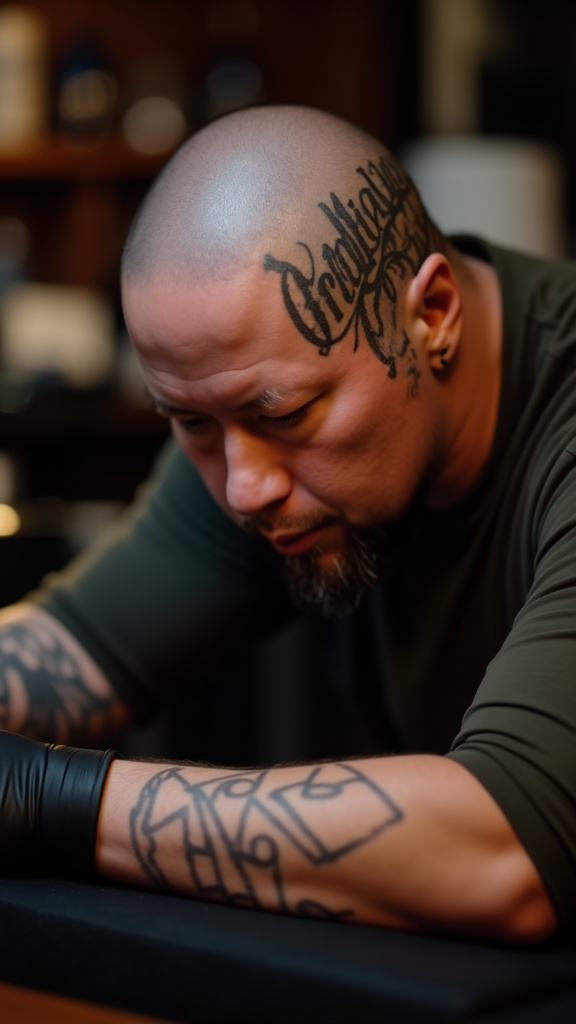
Mastering Article Writing for Tattoo Artists
```html
The Art of the Article: A Guide for Tattoo Artists and Storytellers
Hello, I’m Noelin Wheeler. In my studio, we talk a lot about legacy. It’s in the lines we place on skin, the stories we help preserve, and the community we build one conversation at a time. Today, I want to talk about a different kind of legacy: the written word. Specifically, the art of writing a compelling article. Now, you might wonder what article writing has to do with tattooing. For me, it’s everything. It’s about communication, structure, and intention. Whether I’m mapping out a full sleeve narrative for a client or writing a blog post about color theory, the core principles are strikingly similar. You start with a vision, you gather your tools (ink or ideas), and you build something meaningful, piece by deliberate piece.
This isn’t about dry, academic rules. This is about crafting something that resonates, that connects. It’s about taking the thoughtful, client-centered approach we use in the tattoo studio and applying it to writing. So, let’s pull up a chair and break down the process, not as a distant academic, but as a fellow creator who knows the value of a well-told story.
Understanding Your Canvas: Types and Structures
Just as I wouldn’t approach a delicate, single-needle botanical piece the same way I would a bold, traditional panther, understanding the type of article you’re writing is crucial. Each has its own purpose and requires a different set of tools.
Think of it like this in our world:
Expository Writing is your clean, technical linework or a portrait. It’s about presenting information clearly, accurately, and objectively. It’s the "how-to" guide on tattoo aftercare, or an explanation of different tattooing styles.
Persuasive Writing is that consultation where a client is unsure about placement. You’re guiding, explaining why the flow of a design works better on the shoulder than the ankle, using knowledge and vision to help them see the final masterpiece.
Narrative Writing is the story behind the tattoo. It’s the blog post that shares a client’s journey, or an artist’s reflection on what a particular symbol means within a cultural context. It has a beginning, a middle, and an end, woven with emotion.
Descriptive Writing is color theory in action. It’s using words to create a vivid picture, to describe the way light hits a fresh tattoo, or the specific gradient of a sunset we’re trying to capture in ink.
And structure? That’s your stencil. It’s the foundation. The classic article structure—introduction, body, conclusion—is as reliable as a well-drawn outline. For online writing, which is where most of us live now, think of structure as the flow of a tattoo. You need clear sections (headings are your guide lines), short, digestible paragraphs (like manageable tattoo sessions), and a layout that’s easy on the eyes. A reader, much like a client viewing a design, should be able to "read" the piece quickly and know where it’s going.
The Consultation and Research Phase: Laying the Groundwork
You never start tattooing without a consultation. Writing is no different. This phase is about listening, learning, and planning.
Select a Focused Topic. In tattooing, you can’t fit an entire epic novel on a forearm. You find the most powerful scene, the most evocative symbol. Similarly, don’t try to tackle "The Complete History of Japanese Tattooing" in 800 words. Choose a thread: "The Evolution of the Hikae Chest Panel in Modern Irezumi." A specific, well-defined topic allows for depth and genuine insight.
Know Your Audience. This is paramount. Am I writing for someone getting their first tattoo, nervous about the process? Or for a seasoned collector looking to understand advanced biomechanical design principles? Your tone, your vocabulary, your examples—they all shift. Write alongside your reader, not down to them. Some of my best blog ideas come from questions clients ask in the chair. If they’re curious, others are too.
Conduct Rigorous Research. Credibility is everything. In tattooing, we respect lineage, history, and technique. In writing, you respect facts and sources. If I’m writing about the symbolism of the lotus, I’m not just pulling from memory; I’m consulting cultural texts, historical art, and perhaps speaking with artists from that tradition. Use reliable sources: books from respected publishers, interviews with recognized experts, peer-reviewed journals for technical data. Fact-check every date, name, and claim. Your reputation, in ink or in type, is built on trust.
Create Your Outline (The Stencil). This is your roadmap. It prevents you from wandering off course. A good outline for an article lists your main points in a logical order. Does the information flow chronologically? Thematically? For a web article, your outline should include those crucial H2 and H3 headings. They’re the signposts that guide your reader through the journey, just as the flow of a tattoo guides the eye across the body.
The Application: Crafting Compelling Content
The needles are sterile, the ink caps are filled, the stencil is placed. It’s time to create.
Start With a Strong Introduction. This is your first impression. It needs to hook the reader and tell them they’re in the right place. In the studio, a good consultation starts with a genuine connection. In writing, avoid the generic. Don’t start with, "Since the dawn of time, humans have gotten tattoos." Instead, try something like, "The client brought in a photograph of their grandmother’s hands, worn from years of gardening. They didn’t want a portrait; they wanted the feeling of soil and growth." Be direct. Be intriguing. Establish what you’re doing and why it matters.
Build the Body With Precision. Each paragraph is a pass of the needle, building saturation and detail. One main idea per paragraph. Support it with facts (the history), quotes (the voices of other artists or clients), and examples (specific tattoo designs). If you’re explaining a concept like "blackwork," don’t just define it; show it. Describe the stark contrast of a Thomas Hooper-inspired piece versus the subtle dotwork of a sacred geometry tattoo.
Master the Rhythm. This is the soul of both tattooing and writing. At the macro level, use transitions to move smoothly from one idea to the next: "Furthermore," "In contrast," "For instance." At the micro level, vary your sentence structure. A long, descriptive sentence can be followed by a short, powerful one. It creates a pulse. It keeps the reader engaged. Read your work aloud. Does it sound like a natural conversation? Does it flow?
Write to Be Found. For online writing, this is essential. Think of keywords as landmarks. If someone is searching for "realism tattoo healing process," your article should speak that language. Incorporate these terms naturally in your title, headings, and opening. But never sacrifice quality for keywords. The title itself should be a clear promise: "A Realism Tattoo Aftercare Guide: Preserving Detail and Depth" is infinitely better than a vague, clever phrase.
The Final Pass: Editing and Polishing
No tattoo is complete after the first pass. The final session is for contrast, highlights, and crisp lines. Editing is that final session for your writing.
Eliminate the Unnecessary. Concise writing is powerful writing. Cut redundant phrases, vague words, and anything that doesn’t serve the piece. In tattooing, we know when a line is shaky or a shade is muddy. In writing, be just as ruthless. Use active voice. "The artist layered the color" is stronger than "The color was layered by the artist."
Proofread With a Magnifying Lens. Spelling and grammar are your line weights and color saturation; they must be consistent and correct. A misspelled artist’s name or a misused term like "its" versus "it’s" can undermine your entire piece. Read it aloud slowly. You’ll hear the clunky phrases your eye might skip over.
Maintain a Consistent Voice. Your tone is your artistic style. Whether it’s formal and academic or warm and conversational, it should not waver. Ensure every paragraph logically leads to the next, building a cohesive whole, just as every element in a tattoo composition should feel intentional and connected.
Seek a Fresh Perspective. In the studio, I often step back from the tattoo, view it in a different mirror, or ask a trusted colleague for their eye. Do the same with your writing. Let someone else read it. They will catch confusing passages, leaps in logic, or typos you’ve become blind to. This collaborative review is invaluable.
Conclusion: The Legacy of a Well-Told Story
Article writing, like tattooing, is a discipline of service. It’s not about showcasing every word you know; it’s about using the right words to give your reader something of value: understanding, inspiration, connection. It starts with a spark of curiosity, is built on a foundation of research and structure, and is refined through meticulous craft.
The perfect idea rarely arrives fully formed. It reveals itself in the process, whether you’re sketching in a notebook or drafting on a screen. Embrace the editing, the reworking. It’s not a sign of failure; it’s the commitment to excellence. Always, always write with your reader in the chair beside you. What do they need to know? How can you guide them clearly?
Because at its heart, a great article, like a great tattoo, isn’t just about transmitting information. It’s about creating a lasting impression. It’s about taking a thought, a story, or a technique and rendering it with such clarity and care that it becomes a part of someone else’s world. That’s the true art. That’s the legacy we build, in ink and in words.
```
